
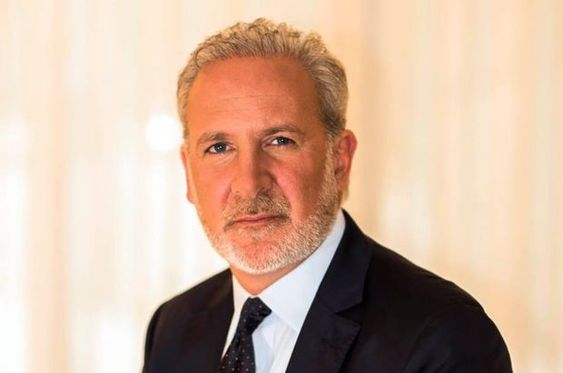
Peter Schiff is a name that has become synonymous with contrarian investing. The son of the famous economist Irwin Schiff, Peter is an investment advisor, commentator, and entrepreneur who has gained notoriety for his bearish views on the US economy and his predictions of impending financial doom. But who is Peter Schiff, and what makes him such a compelling figure in the world of finance?
Early Life and Career
Peter Schiff was born in 1963 in New Haven, Connecticut. His father, Irwin Schiff, was a prominent figure in the libertarian movement, known for his anti-tax activism and his outspoken views on the role of government in society. Peter grew up in a household where politics and economics were constant topics of discussion, and his father’s influence was a major factor in shaping his views on these subjects.
After graduating from the University of California, Berkeley, with a degree in finance and accounting, Peter began his career in the financial sector. He worked for several firms, including Shearson Lehman Brothers and Euro Pacific Capital, before founding his own investment advisory firm, Euro Pacific Capital, in 1996.
Investment Philosophy
Peter Schiff’s investment philosophy is rooted in his belief in Austrian economics, a school of thought that emphasizes the importance of free markets, limited government, and sound money. He has been a vocal critic of the Federal Reserve and its policies, arguing that the central bank’s low interest rate policies and money-printing have created a massive bubble in asset prices and that a major economic collapse is inevitable.
Schiff is perhaps best known for his prescient predictions about the 2008 financial crisis. In 2006, he published a book titled “Crash Proof: How to Profit from the Coming Economic Collapse,” in which he warned that the housing bubble was about to burst and that the US economy was headed for a severe recession. Despite widespread skepticism at the time, Schiff’s predictions proved to be remarkably accurate, and he has since gained a reputation as one of the few economists who saw the crisis coming.
In addition to his bearish views on the US economy, Schiff has also been a strong advocate for investing in gold and other precious metals. He argues that these assets offer a safe haven for investors in times of economic turmoil and that they are a hedge against inflation and currency devaluation.
Controversies
Despite his track record of successful predictions, Peter Schiff is not without his detractors. Some critics have accused him of being a perpetual bear, arguing that he has been consistently wrong about the direction of the stock market and that his predictions of economic collapse have not come to pass. Others have criticized his investment advice, claiming that his recommendations are too heavily weighted toward gold and other precious metals and that he has missed out on the bull market in stocks over the past decade.
Schiff has also been the subject of controversy for his political views. He is a vocal supporter of the Republican Party and has been a frequent guest on conservative media outlets such as Fox News. He has been criticized for his opposition to social welfare programs and his advocacy for free-market policies that many see as benefiting the wealthy at the expense of the poor.
Conclusion
Love him or hate him, Peter Schiff is a figure who cannot be ignored in the world of finance. His bold predictions and his unyielding commitment to his investment philosophy have earned him a devoted following of investors who see him as a voice of reason in a world of economic uncertainty. At the same time, his controversial views and his sometimes-inflammatory rhetoric have made him a lightning rod for criticism and skepticism.
Whether Peter Schiff’s predictions of economic collapse and financial doom will come to pass remains to be seen. But regardless of the outcome, his influence on the world of finance and economics is sure to continue to be felt for years to come. His advocacy for sound money and limited government has helped to shape the debate around economic policy, and his warnings about the dangers of excessive debt and monetary stimulus have become increasingly relevant in the wake of the Covid-19 pandemic.
In the end, the true legacy of Peter Schiff may not be his investment returns or his predictions of financial collapse, but rather his ability to challenge conventional wisdom and to force investors and policymakers to confront uncomfortable truths about the state of the global economy. Whether or not one agrees with his views, there is no denying that Peter Schiff has left his mark on the world of finance and will continue to be a significant figure in the years to come.
Very interesting!